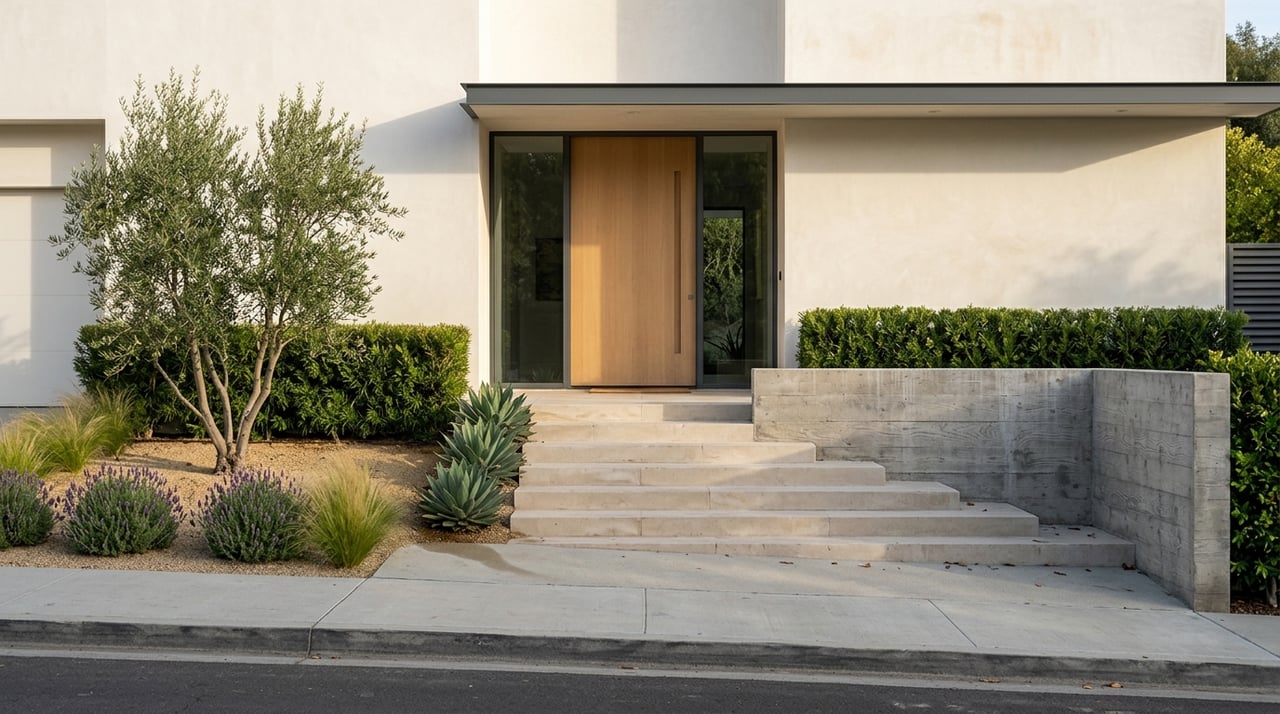
Decoding Brentwood’s Micro-Neighborhoods For Home Buyers
June 25, 2026
June 25, 2026
If you have started shopping in Brentwood, you have probably noticed something quickly: two homes with the same ZIP code can offer very different day-to-day experiences. That can make your search feel exciting, but also a little confusing. The good news is that Brentwood becomes much easier to understand once you view it as a collection of micro-neighborhoods, each with its own street pattern, housing character, and rhythm of daily life. Let’s dive in.
City planning and historic survey documents show that Brentwood did not develop as one uniform neighborhood. Instead, it grew in layers, from early streetcar-era subdivisions to postwar residential pockets and hillside enclaves shaped by topography.
That history still shows up in the way Brentwood feels today. Lot sizes, home styles, privacy, and walkability can shift quickly as you move from the flats to the canyons or from San Vicente to streets north of Sunset.
For buyers, this matters because your best fit may have less to do with “Brentwood” as a whole and more to do with which pocket matches your lifestyle. A neighborhood-first search can help you narrow your options faster and make better decisions.
One of the simplest ways to decode Brentwood is to sort it into four broad experiences. This framework closely follows the city’s planning and survey material.
These are not hard boundaries. Still, they are a very useful starting point when you are deciding where to focus your home search.
If walkability matters to you, San Vicente is one of Brentwood’s clearest choices. The San Vicente Scenic Corridor Specific Plan describes it as one of Los Angeles’ few pedestrian-oriented scenic highways, with an emphasis on neighborhood retail, landscaping, pedestrian amenities, and ground-floor services for nearby residents.
In practical terms, this pocket is where Brentwood feels easiest for coffee runs, casual meals, and everyday errands. It has a livelier rhythm than some of the more residential streets deeper in the neighborhood.
Near Sunset and Barrington, Brentwood Village functions as a small commercial center with one- and two-story storefronts and a pedestrian-oriented layout. Planning documents note that it was designed to serve nearby residential growth and provide neighborhood-serving shopping beyond the San Vicente corridor.
Brentwood Country Mart near 26th Street adds another distinct layer. This open-air 1940s retail and food complex remains one of Brentwood’s signature gathering spots and helps reinforce that everyday village feel buyers often want.
Homes near these retail pockets can appeal to buyers who want easier access to neighborhood amenities without leaving Brentwood. Compared with some hillside sections, this area tends to feel more connected to daily activity and less removed from the street.
If you want a routine that includes being out and about in the neighborhood, this pocket often deserves an early look. If you prefer a more tucked-away residential setting, you may find yourself drawn elsewhere.
Brentwood Park is one of the neighborhood’s earliest subdivisions, originally laid out in 1906 along the Westgate streetcar line. Survey material highlights its curving streets, traffic circles and ovals, deep setbacks, large lots, and mature trees.
This is the pocket many buyers picture when they think of classic Brentwood. The streetscape feels established and orderly, with a more formal residential presence than some of the denser or more topographically varied parts of the neighborhood.
Homes in Brentwood Park commonly date from the 1920s through the 1950s. Styles include American Colonial, Spanish Colonial, Tudor, early Modern, and Ranch homes.
For buyers, the appeal often comes from the combination of lot scale, landscaping, and historic variety. SurveyLA also notes that many properties have privacy walls or hedges, which can make the street view feel quieter and more restrained than what sits beyond the frontage.
If you are looking for established lot character and a classic residential setting, Brentwood Park is often one of the strongest matches. It offers a different experience from San Vicente’s convenience-focused energy and from the more irregular terrain of the canyons.
This area can be especially helpful to compare if you are deciding between a home that feels rooted in Brentwood’s early development and one that leans more heavily on views or immediate walkability.
Brentwood Glen was subdivided in the 1920s and saw much of its defining development between 1935 and 1942. SurveyLA describes it as more densely laid out than many other Brentwood neighborhoods, with a location adjacent to Westwood and some physical separation created by the 405 Freeway.
That gives this pocket a different feel from the larger-lot sections of Brentwood Park. It reads as more compact and more grid-based in places, especially immediately west of the 405.
South of Sunset, the land generally slopes upward to the north. The survey notes a mix of grid-patterned subdivisions in Brentwood Glen and curving streets with generously sized lots between San Vicente and Sunset west of Barrington.
For buyers, that means “south of Sunset” is not one single experience either. Some blocks feel more efficient and closely patterned, while others feel softer and more spacious.
This pocket is often best understood as a convenience-and-access choice. Based on the street pattern and location, it can feel less estate-like than parts of the hills, while still offering a quieter and more residential atmosphere than the San Vicente corridor.
If your search priorities include practical access, a neighborhood feel, and a location tied closely to nearby Westside destinations, this area is worth careful comparison.
North of Sunset, Brentwood transitions into hills and canyons. Streets become more curving, and lots often become larger, more irregular, and more closely shaped by the natural topography.
This is where Brentwood shifts most clearly toward privacy, views, and architectural distinction. It also tends to become more car-dependent than the flatter, more walkable pockets closer to neighborhood retail.
Westgate is the original Brentwood subdivision. San Vicente was graded in 1905, and the Westgate streetcar line opened in 1906.
For buyers who care about Brentwood’s earliest residential history, Westgate and nearby pockets carry special significance. They help explain why some sections of the neighborhood still have a strong sense of historic identity.
Survey material ties much of this northern area to Mandeville Canyon and Kenter Canyon, where development reflects the underlying terrain. In Mandeville Canyon, early-1940s development had a horse-property orientation.
Riviera Ranch and Old Ranch Road further reinforce that equestrian identity through ranch-house planning, bridle paths, stables, and meandering cul-de-sacs. For buyers, that creates a very different setting from the flatter, more formal residential grids elsewhere in Brentwood.
Crestwood Hills stands out as Brentwood’s strongest mid-century modern pocket. The Mutual Housing Association began developing it in the upper Kenter Canyon area in 1946, with limited grading intended to preserve views and privacy.
Homes here are known for design features such as concrete block, wood, expansive glass, and low-pitched roofs. If architecture is one of your top search priorities, this area may deserve a category of its own on your list.
When buyers compare Brentwood micro-neighborhoods, a few differences come up again and again. These are often more useful than broad labels.
Some streets are curving and spacious, while others are more compact and grid-like. That affects how a neighborhood feels as soon as you drive or walk through it.
Brentwood Park is known for large lots and mature trees. Brentwood Glen tends to feel denser and more compact, while the hills and canyons often offer larger or more irregular lots with stronger privacy.
Architecture changes across Brentwood too. Brentwood Park leans toward period revival and early traditional homes, Brentwood Glen reflects more postwar residential fabric, and the hills include ranch, modern, and custom homes.
San Vicente and Brentwood Village are the easiest pockets for errands, dining, and everyday neighborhood activity. The hills and canyons are more about residential retreat than storefront convenience.
If Brentwood feels broad at first, try organizing your search around how you want to live day to day. That usually brings the right micro-neighborhoods into focus faster than starting only with square footage or style.
Ask yourself:
Once you answer those questions, Brentwood starts to sort itself. The neighborhood becomes less about one big name and more about choosing the right pocket for your routine, priorities, and long-term fit.
Because Brentwood changes so quickly from one section to another, small location shifts can have a big impact on how a home lives. Two properties may both be “in Brentwood,” but the experience of each can be very different in terms of walkability, lot character, street feel, and privacy.
That is where neighborhood expertise matters. A buyer-focused, concierge service can help you compare not just homes, but also the micro-neighborhood context around them, including off-market access when the right fit is harder to find.
If you are planning a move in Brentwood or nearby Westside enclaves, working with a local advisor can help you focus your search, understand the tradeoffs between pockets, and move with more confidence. To explore Brentwood with neighborhood-level insight and discreet buyer guidance, connect with Lauren Ravitz.
Stay up to date on the latest real estate trends.
Lauren delivers a full-service package to each of her clients with her connections to local businesses and influential people, with a finger on the pulse of the Los Angeles lifestyle, and with the outstanding resources at Berkshire Hathaway HomeServices. Lauren holds her relationships with clients in high regard and does so with honesty, integrity, and confidentiality.
11677 San Vicente Blvd Suite 307 Los Angeles CA 90049