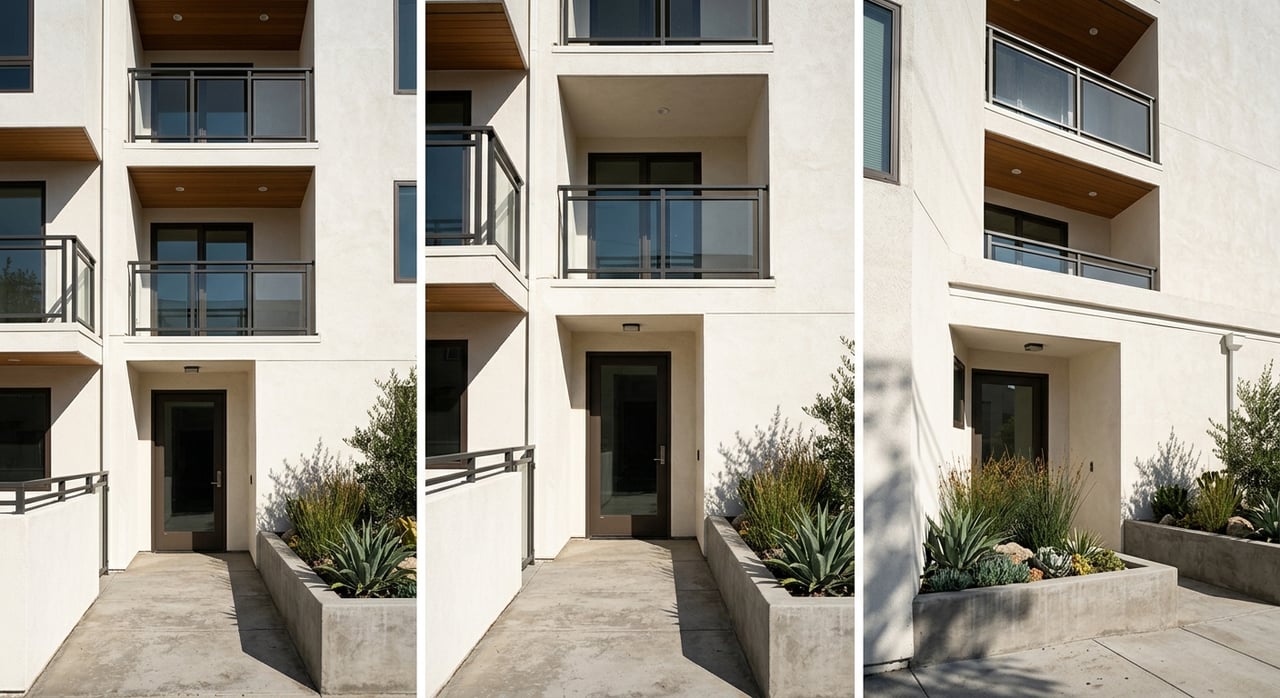
Rental Property Near UCLA: A Westwood Investor Guide
June 4, 2026
June 4, 2026
If you are thinking about buying a rental property near UCLA, Westwood stands out for one simple reason: demand starts with the university and stays active year-round. That can make the area appealing, but it also means you need to look beyond headline rents and understand timing, tenant mix, and Los Angeles regulations before you buy. In this guide, you will get a practical look at how Westwood rental demand works, what current rent bands suggest, and where investors should be especially careful. Let’s dive in.
Westwood benefits from a built-in renter base tied to UCLA. The university reports 46,678 total students, along with 5,464 faculty members, which creates a large pool of people who want to live close to campus, Westwood Village, and nearby medical and academic facilities.
That demand is not limited to one renter type. UCLA also maintains housing options for upper-division undergraduates, graduate students, medical house staff, and faculty in or near Westwood, which helps confirm that the local rental market is shaped by institutional demand rather than general Los Angeles turnover alone.
For you as an investor, that matters because it supports a more specialized rental profile. In Westwood, convenience, proximity, and practical unit features often carry more weight than lot size or commute tradeoffs.
Current rent snapshots show why Westwood stays on many investors’ radar. Apartments.com places Westwood rents at about $2,084 for a studio, $2,868 for a one-bedroom, $4,045 for a two-bedroom, and $5,973 for a three-bedroom.
Zumper shows a slightly different picture, with average apartment rent around $2,699, one-bedrooms at $2,699, and two-bedrooms at $3,660. The difference between platforms is important because Westwood pricing can shift meaningfully based on building quality, parking, furnishing, and how close the property is to UCLA.
Condos show an even wider spread. Active examples range from around $2,200 for a studio to roughly $4,300 to $4,500 for several two-bedroom condos, while higher-end luxury two-bedroom units can reach about $8,500 to $12,700 depending on views, finishes, and amenities.
Westwood rents generally sit above the broader county market. USC Lusk reports Los Angeles County average rent at $2,336 in October 2025, with vacancy at 5.37% and forecast average annual rent growth of just 0.64% through October 2027.
That wider context is useful because it keeps expectations grounded. Westwood may command a premium, especially for two-bedroom and larger units, but it still operates within a county market where rent growth is expected to stay modest.
For your underwriting, that means premium rents do not automatically equal aggressive future growth. A strong Westwood deal should still make sense with conservative rent assumptions.
One of the clearest patterns in Westwood is seasonality tied to UCLA’s calendar. For the 2025-26 academic year, fall instruction begins September 25, 2025, spring instruction ends June 5, 2026, and on-campus housing move-out is due by June 12, 2026.
Graduate housing contracts end July 1 each year, and new-term applications open no later than May 1. Undergraduate housing change-of-assignment requests also run into mid-July, which points to a strong late spring through late summer leasing window.
In practical terms, you should expect the most leasing pressure and turnover activity during that period. There may also be a smaller push ahead of fall quarter as renters finalize housing plans close to the start of classes.
The Westwood renter pool near UCLA is broader than many people assume. It includes undergraduates and transfer students who want walkable access to campus, often with a preference for furnished or semi-furnished units.
Graduate students and student families are also part of the mix, often following UCLA’s annual housing timelines and renewal cycles. In addition, medical house staff, fellows, and interns are an established demand group, and faculty and professional staff remain an important source of year-round tenancy.
UCLA’s own faculty housing rates help illustrate this stability. For 2026-27, faculty one-bedroom apartment pricing runs from about $2,187 to $3,422, while condo pricing ranges from roughly $3,026 to $6,667.
For investors, the takeaway is straightforward: Westwood demand is not only about traditional student leasing. It is a mix of academic-year renters, institution-connected professionals, and residents who place a premium on location and convenience.
Not every rental product performs the same way near UCLA. Based on current rent bands and university housing patterns, efficient one-bedroom and two-bedroom units often line up well with local demand.
Features matter here, sometimes as much as square footage. Parking, in-unit laundry, furnished or partially furnished setups, and lease terms that match the academic calendar can all influence rent and absorption.
That is especially true in the condo segment. In Westwood, rental pricing for condos is often driven as much by condition, building amenities, and overall presentation as by bedroom count alone.
Westwood renters often pay for convenience they can use every day. A unit close to campus with parking and in-unit laundry may compete differently from a larger unit farther away without those features.
Furnishing can also matter, particularly for renters with shorter planning timelines or those arriving from outside the area. UCLA’s own university apartment offerings include furnished setups with utilities and internet, which reinforces that ready-to-use housing has a real audience in this submarket.
If you are comparing properties, avoid looking only at price per square foot. In Westwood, operational details can have a direct effect on achievable rent and leasing speed.
Before you count on future income, make sure you know which rules apply to the property. Westwood falls within the City of Los Angeles, and the correct regulatory bucket depends on the unit itself, not just on whether it is a condo or a small building.
According to the Los Angeles Housing Department, a rental unit may be subject to the City’s Rent Stabilization Ordinance if it was built on or before October 1, 1978. The ordinance can cover apartments, condominiums, townhomes, duplexes, and two or more single-family dwelling units on the same parcel.
That point is critical because many investors assume a condo is automatically exempt. In Los Angeles, that assumption can lead to underwriting mistakes.
For RSO-covered units, rent increases are regulated. Los Angeles Municipal Code Section 151.06 says the annual maximum increase is based on 90 percent of CPI change for the Los Angeles-Long Beach-Anaheim area, rounded to the nearest whole number, with a 1 percent floor and a 4 percent ceiling.
The code also states that any annual rent increase not previously noticed during June 1, 2025 through June 30, 2026 may not exceed 3 percent. For your pro forma, that means older stock may have less near-term rent flexibility than a newer free-market unit.
LAHD also states that the RSO regulates evictions, which makes compliance a core part of ownership. This is one reason due diligence in Westwood should go beyond rent comps.
Even when a unit is not covered by a more restrictive local ordinance, California law may still apply. The California Department of Real Estate guide states that the Tenant Protection Act caps rent increases at 5 percent plus CPI or 10 percent, whichever is lower, and limits increases to no more than two in any 12-month period.
The same guide says state just-cause rules generally apply after 12 months of occupancy, or 24 months if an additional adult tenant was added less than 12 months earlier. That means a non-RSO unit is not necessarily unrestricted.
The guide also explains that condos and single-family homes are not automatically exempt from state law. Certain exemptions may apply, but they depend on ownership structure and required written notice.
If a unit is RSO-covered, LAHD requires annual registration. The current registration fee is $38.75 per unit, and LAHD says 50 percent of that amount may be passed through to the tenant as a $1.61 monthly surcharge if proper notice is given.
That may sound small, but it points to a larger lesson. In Westwood, compliance is not a side issue. It should be part of your operating budget, rent strategy, and pre-closing review from the start.
A smart Westwood pro forma should reflect both the premium nature of the submarket and the limits of the broader market. Countywide rent growth is expected to stay relatively modest, so it is wise to model slower renewal growth rather than assume fast increases year after year.
You should also account for turnover risk in late spring and summer, especially if your target renter profile is closely tied to the UCLA calendar. Vacancy timing may be just as important as annual vacancy rate.
Finally, build in a unit-by-unit regulatory review. Pre-1978 condos, duplexes, and small apartment buildings deserve especially careful analysis before you rely on future rent assumptions.
If you are evaluating rental property near UCLA, keep your attention on the factors most likely to affect performance:
A good Westwood investment is rarely just about buying near campus. It is about buying the right product, with the right features, under the right regulatory assumptions.
If you are exploring a condo or small multifamily opportunity in Westwood, local insight can make a meaningful difference. From neighborhood expertise to thoughtful guidance on property positioning and value, Lauren Ravitz offers the kind of concierge service Westside buyers and investors rely on.
Stay up to date on the latest real estate trends.
Lauren delivers a full-service package to each of her clients with her connections to local businesses and influential people, with a finger on the pulse of the Los Angeles lifestyle, and with the outstanding resources at Berkshire Hathaway HomeServices. Lauren holds her relationships with clients in high regard and does so with honesty, integrity, and confidentiality.
11677 San Vicente Blvd Suite 307 Los Angeles CA 90049