Santa Monica Condos Vs Houses: Pros And Cons
May 7, 2026
May 7, 2026
Thinking about buying in Santa Monica and stuck on one big question: condo or house? You are not alone. In a market where price gaps are dramatic and each neighborhood can feel like its own micro-market, the right choice often comes down to how you want to live, what level of upkeep you want, and how much flexibility you need over time. This guide breaks down the pros and cons of Santa Monica condos versus houses so you can make a smarter, more confident decision. Let’s dive in.
In Santa Monica, the condo-versus-house conversation usually starts with cost. Redfin’s current city guide reports a median sale price of $3,689,500 for single-family homes and $1,075,000 for condo/co-op homes. That is a major spread, and it explains why condos are often the more accessible entry point into this market.
Citywide numbers also show why buyers need to look closer. Redfin’s March 2026 data shows a median sale price of $1,564,500 and a median of 52 days on market, while Realtor.com’s January 2026 summary places the city’s median home price at $1,749,500. These figures measure the market differently, but together they point to the same reality: Santa Monica is expensive, and property type matters a lot.
Neighborhood pricing adds another layer. Realtor.com reports January 2026 median prices of $2,499,974 in North of Montana, $1,485,000 in Wilshire-Montana, and $1,049,500 in Mid-City. Redfin also showed Downtown Santa Monica at $1.2 million in March 2026, which reinforces the idea that you should evaluate Santa Monica as a set of micro-markets, not one uniform market.
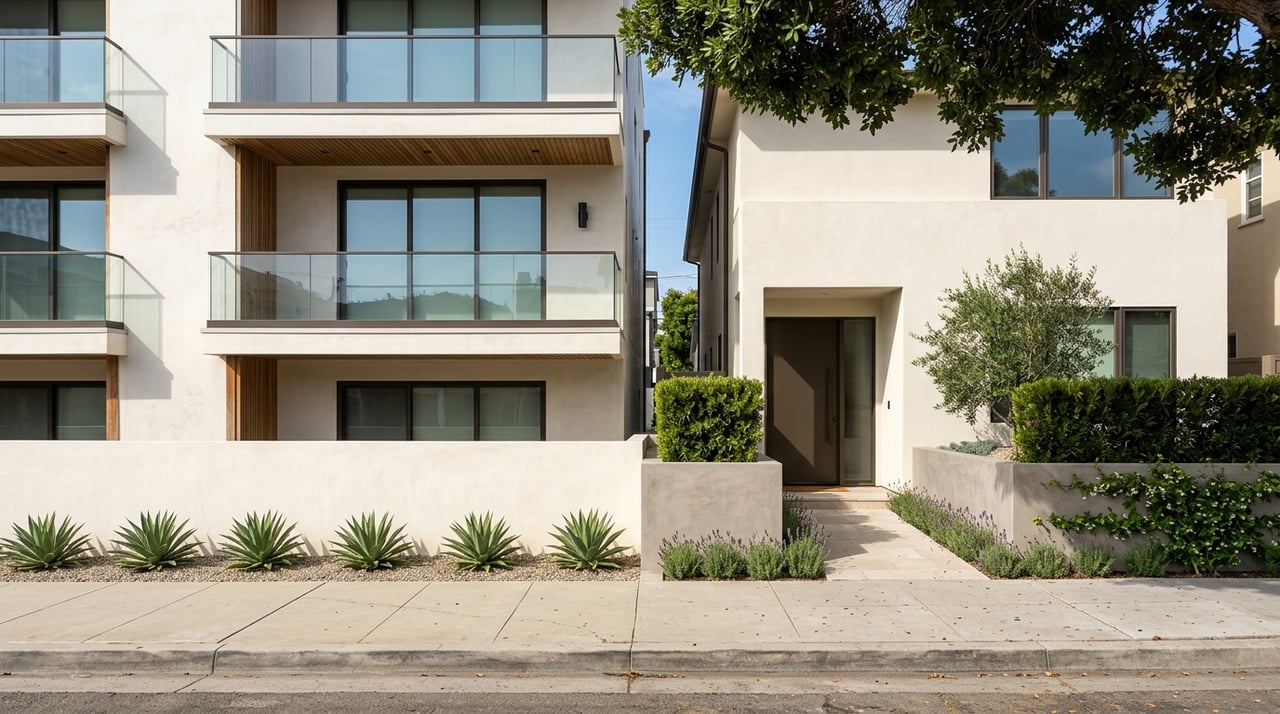
For many buyers, a condo offers a simpler path into Santa Monica ownership. If you want to live near the coast, enjoy a more central location, or keep your maintenance responsibilities lighter, a condo may align well with your goals. It can be an especially practical fit if convenience matters as much as square footage.
In California common-interest developments, buying a condo generally means automatic membership in the homeowners association, agreement to the community rules, and payment of HOA fees and assessments. The California Attorney General notes that HOAs enforce CC&Rs and related rules, while the California Department of Real Estate explains that association budgets typically include reserves for future repair and replacement of common-area components. That structure can create a more managed ownership experience.
Another advantage is reduced day-to-day upkeep. In general, the association maintains common areas and amenities, while you are responsible for your separate interest. Compared with a detached house, that often means less hands-on exterior maintenance.
Santa Monica’s layout also makes condo living appealing. The City describes Santa Monica as walkable, bikeable, and accessible by public transit, and the Expo Light Rail opened stations at Downtown Santa Monica, 17th Street/Santa Monica College, and 26th Street/Bergamot. If you want a car-light lifestyle, condos near these transit corridors can be especially attractive.
If you value privacy, land, and more direct control over the property, a house may be the better fit. In Santa Monica, that control comes at a premium, which is reflected in the much higher median single-family sale price. You are not just buying more space. In many cases, you are buying a scarcer asset with more long-term flexibility.
Santa Monica’s 2019 R1 standards help explain that value. The City set a 28-foot maximum building height and 45% maximum parcel coverage for new construction in these areas, while also allowing more flexibility for remodels and additions. According to the City, the update was designed to preserve neighborhood character and encourage retention of existing homes.
For buyers who want the option to adapt a property over time, houses may offer more room for value creation. The City notes that ADUs are exempt from parcel coverage, and Santa Monica has continued to support second-unit production under state-law requirements. That does not mean every project will work, but it does mean detached homes may offer more ways to add usable space over time, subject to local zoning and building rules.
With a house, you also take on more ownership responsibility. Unlike condo living, where building systems and common areas are managed collectively, a detached homeowner is typically responsible for the full upkeep of the home and lot. That means more maintenance, but also more control over the timing, materials, and scope of improvements.
In this market, your lifestyle may matter just as much as your budget. A condo is often a strong fit if you want easy access to downtown amenities, transit, and a more streamlined ownership model. A house may be a better match if you want privacy, outdoor space, or the ability to shape the property over time.
This is where Santa Monica differs from many other markets. The city’s blend of coastal living, transit access, and tightly regulated land use means the same buyer might make a very different choice here than they would elsewhere. What works best depends on how you define convenience, control, and long-term value.
Beach proximity is part of Santa Monica’s appeal, but it also comes with added considerations. The City says portions of the coastline fall within the tsunami inundation zone, and its 2025 Safety Element states that the state’s tsunami hazard area extends roughly 700 to 1,500 feet inland and affects 228 parcels west of Pacific Coast Highway and Appian Way. If you are considering a home near the coast, location-specific due diligence matters.
This can affect condos and houses differently. A beach-adjacent condo may offer views, walkability, and easier maintenance, but building age, exposure, and HOA finances may become more important if major repairs are needed. A beach-adjacent house may offer more privacy and land, but remodel or rebuild plans may face more scrutiny if the property is in the coastal zone.
The City also notes that Santa Monica’s coastal planning is governed by the State Coastal Act and the Local Coastal Program, with policies tied to access, scenic views, environmental resources, water quality, and sea-level-rise planning. In practice, that means coastal properties often deserve an extra layer of review before you buy.
If you may rent the property in the future, avoid broad assumptions. Santa Monica’s rent-control rules depend on the unit’s history, and the City’s Rent Control Board specifically tells owners of single-family homes and separately sold condominiums to review exemption criteria carefully. In other words, condo versus house alone does not determine how a property will be treated.
That makes property-level review essential, especially if your plan includes flexibility later. Whether you are buying a primary residence, second home, or future investment-minded property, the details matter.
A simple way to frame the decision is this: condos are often a convenience and lifestyle play, while houses are often a land and flexibility play. Neither is automatically better. The right option is the one that fits your budget, your daily routine, and your comfort level with maintenance and oversight.
You may lean toward a condo if you want:
You may lean toward a house if you want:
In Santa Monica, appreciation potential is not just about whether a property is a condo or a house. It often comes down to the specific micro-market, transit or coastal access, HOA health, building quality, and the local zoning framework. That is why neighborhood expertise matters so much here.
If you are weighing Santa Monica condos versus houses, the smartest next step is a property-by-property review grounded in your goals. With neighborhood expertise, concierge service, and a thoughtful strategy tailored to the Westside, Lauren Ravitz can help you compare the right options with clarity and confidence.
Stay up to date on the latest real estate trends.

Lauren delivers a full-service package to each of her clients with her connections to local businesses and influential people, with a finger on the pulse of the Los Angeles lifestyle, and with the outstanding resources at Berkshire Hathaway HomeServices. Lauren holds her relationships with clients in high regard and does so with honesty, integrity, and confidentiality.
11677 San Vicente Blvd Suite 307 Los Angeles CA 90049