Why Cheviot Hills' Median Home Price Is Averaging Two Different Markets
August 20, 2026
August 20, 2026
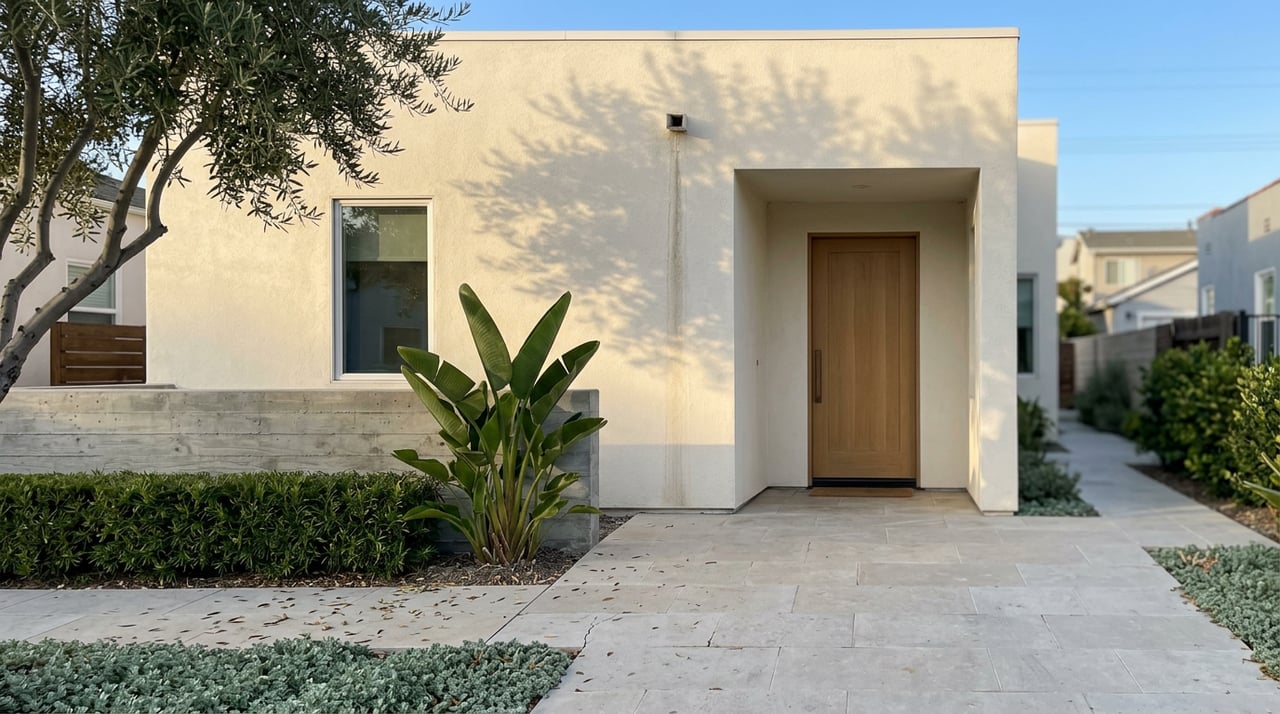
Two listings went up in Cheviot Hills within weeks of each other this year. One was a single-story home on a quiet street, the kind of listing description that reads "first time on the market in over 75 years," still held by the family that built it. The other was a brand-new architectural build a few blocks over, tucked behind a hedge on one of the neighborhood's quieter non-through streets, five bedrooms and six baths finished in the last twelve months. Both closed. Both fed into the same median that shows up when you search Cheviot Hills home prices.
That median sat near $3 million through the first half of 2026. It is not wrong. It is also not describing one market. It is averaging two.
Cheviot Hills is a small neighborhood by design. Roughly 2,500 single-family homes sit inside a compact grid bounded by Motor Avenue, Pico Boulevard, Castle Heights Avenue and the 10 Freeway, most of them built between the 1930s and 1960s in Tudor Revival, Spanish Colonial Revival, and traditional ranch styles. Nothing about that stock changes fast, because almost nothing turns over. In February 2026, 12 homes sold in the neighborhood, down from 17 the year before. That is not a housing market in the way a tract of 500 nearly identical condos is a housing market. That is a dozen data points standing in for the value of an entire community.
When a market that thin reports its median, a single unusually large or unusually small sale can swing the number by a meaningful percentage. That is not a flaw in how the median is calculated. It is what happens when you calculate a median from a dozen transactions instead of a thousand.
The clearest sign this is happening in Cheviot Hills right now is that the headline numbers do not agree with each other. Median sale price was reported roughly flat to modestly positive through early 2026, depending on the source. Average home value, tracked differently, showed a 3.2 percent gain over the trailing year as of late June 2026. Median price per square foot, over that same window, was reported down nearly 10 percent year over year.
Those three numbers cannot all be describing the same underlying trend in home values. What they are describing is a mix shift: which specific homes happened to sell, and in what condition, in a given month.
Walk the neighborhood and the split becomes visible. In the older, established pocket east of Motor Avenue, including the Monte Mar Vista tract that was developed between 1926 and 1940 by a group of Westside builders including W.R. McConnell, Fred W. Forrester and John P. Haynes, and later expanded by Ole Hanson and the Frank Meline Company, homes trade on lot value and location as much as on finished square footage. A meaningful share of what comes to market here is generational: a single-story house held by one family for fifty or seventy-five years, priced for its bones and its position rather than its kitchen.
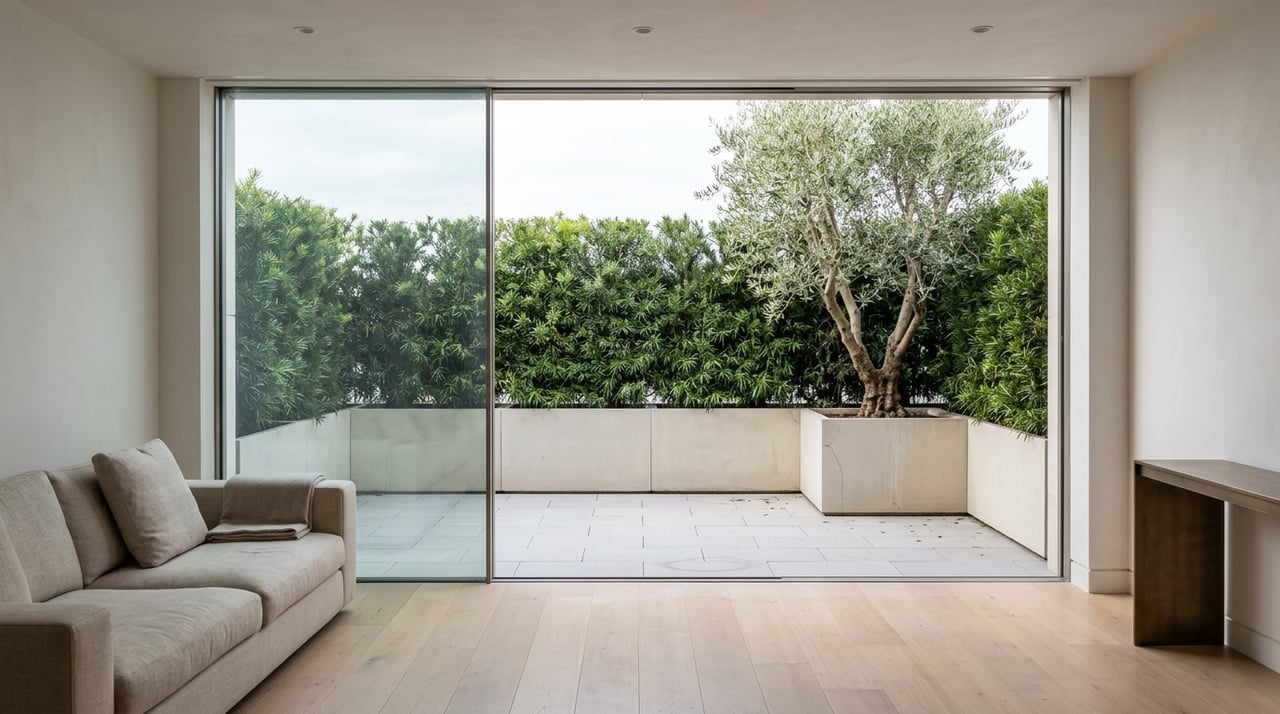
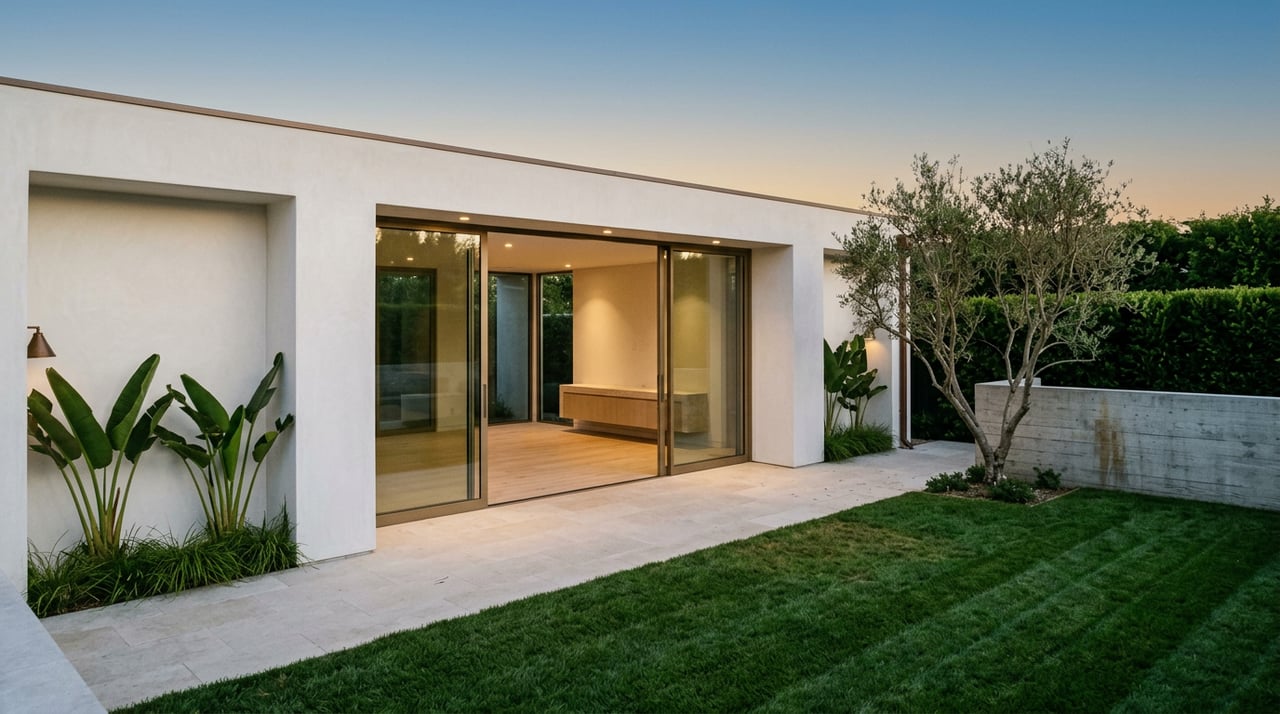
A few streets away, particularly in the newer Cheviot Hills Country Club Estates pocket and on infill lots near the golf course, the opposite kind of listing shows up: architectural new construction, finished within the last year, priced at or above the top of the range because the buyer is purchasing current finishes rather than renovation potential.
These are not competing for the same buyer. A family paying for a legacy lot with the intent to renovate or rebuild is not weighing the same tradeoffs as a buyer who wants a move-in-ready five-bedroom home with a finished kitchen and no construction ahead of them. Yet both transactions land in the same neighborhood median.
Price per square foot data bears this out at the pocket level. Recent figures put the range across Cheviot Hills between roughly $772 and $854 per square foot, with homes in the northern part of the neighborhood near Pico Boulevard, inside the 90064 zip code, tending toward the lower end, and larger lots closer to the golf course commanding the premium. An 80-plus-point spread in price per square foot inside one neighborhood is not noise. It is two different products being sold under the same address.
| Typical stock | What the price is buying | |
|---|---|---|
| North quadrant, near Pico Blvd (90064) | Original 1930s-1960s homes, smaller lots | Location and land, often unrenovated |
| Monte Mar Vista / golf course adjacent | Legacy estates on larger lots (6,000-9,500 sq ft) | Lot size, privacy, proximity to Rancho Park |
| Cheviot Hills Country Club Estates and new infill | New or fully rebuilt construction | Finished square footage, modern systems, no renovation runway |
Buyers comparing Cheviot Hills against other Westside neighborhoods run into a second version of the same problem, because "Westside" itself is not a fixed boundary. One widely used geography reported a median sale price near $2.2 million over the three months ending May 2026, down slightly year over year, with homes taking an average of 54 days to sell. A different cut of essentially the same broader area reported a median closer to $1.8 million as of July 2026, with price per square foot up nearly 8 percent year over year.
Neither number is wrong. They are drawing the map differently. That is worth sitting with before you use any single "Westside" figure to decide whether Cheviot Hills looks expensive or reasonable by comparison. The honest comparison is pocket to pocket and property type to property type, not neighborhood median to neighborhood median.
Broader trend data for 2025 across nearby Westside markets showed appreciation in the low single digits almost everywhere, generally in the 1 to 4 percent range depending on the specific area and property type, which is consistent with what Cheviot Hills' own numbers suggest once you strip out the mix-shift noise. The neighborhood is not detached from the rest of the Westside. It is just small enough that its own median is a much rougher instrument for measuring that trend than a larger market's median would be.
For a buyer, the practical move is to stop anchoring on the neighborhood median entirely and ask which of the two markets a specific listing belongs to. A legacy home priced near the lower end of the range is not necessarily a bargain. It may be priced to reflect the buyer's coming renovation cost. A new-construction listing priced near the top is not necessarily overpriced. It may be reflecting the absence of that same cost. Comparing the sticker price of one against the other, without adjusting for what work remains, is how buyers end up either overpaying for a project or walking away from a fairly priced finished home.
For a seller, the thin transaction volume cuts the other way. With mortgage rates still sitting around 6.5 percent as of mid-2026, higher-tier listings above roughly $3.5 million have tended to sit longer and, in a number of cases, have required one or two price adjustments before closing. In a market this small, there may be no truly comparable recent sale on your street. The comparable set has to be built pocket by pocket, sometimes stretching to Rancho Park or Beverlywood for a fair reference point, rather than pulled from a citywide or even neighborhood-wide average.
Is this home priced against its land value or its finished condition? Ask what the price per square foot works out to and compare it to the pocket, not the neighborhood average.
How many comparable sales actually support this number? In a market with roughly a dozen sales a month across the entire neighborhood, ask directly how many of those were truly similar in age, lot size, and condition.
Does the days-on-market figure include the higher tier? A neighborhood average blending fast-moving, well-priced homes with slower-moving estate listings tells you less than the pattern for your specific price band.
Cheviot Hills rewards a buyer or seller who treats it as a set of small, distinct pockets rather than one market with a single number attached. If you want a read on what a specific pocket, lot, or listing is actually telling you, and how it stacks up against comparable Westside inventory right now, Lauren Ravitz can walk through the comparable set with you directly. Request Your Westside Home Valuation to start that conversation.
Stay up to date on the latest real estate trends.
Lauren delivers a full-service package to each of her clients with her connections to local businesses and influential people, with a finger on the pulse of the Los Angeles lifestyle, and with the outstanding resources at Berkshire Hathaway HomeServices. Lauren holds her relationships with clients in high regard and does so with honesty, integrity, and confidentiality.
11677 San Vicente Blvd Suite 307 Los Angeles CA 90049